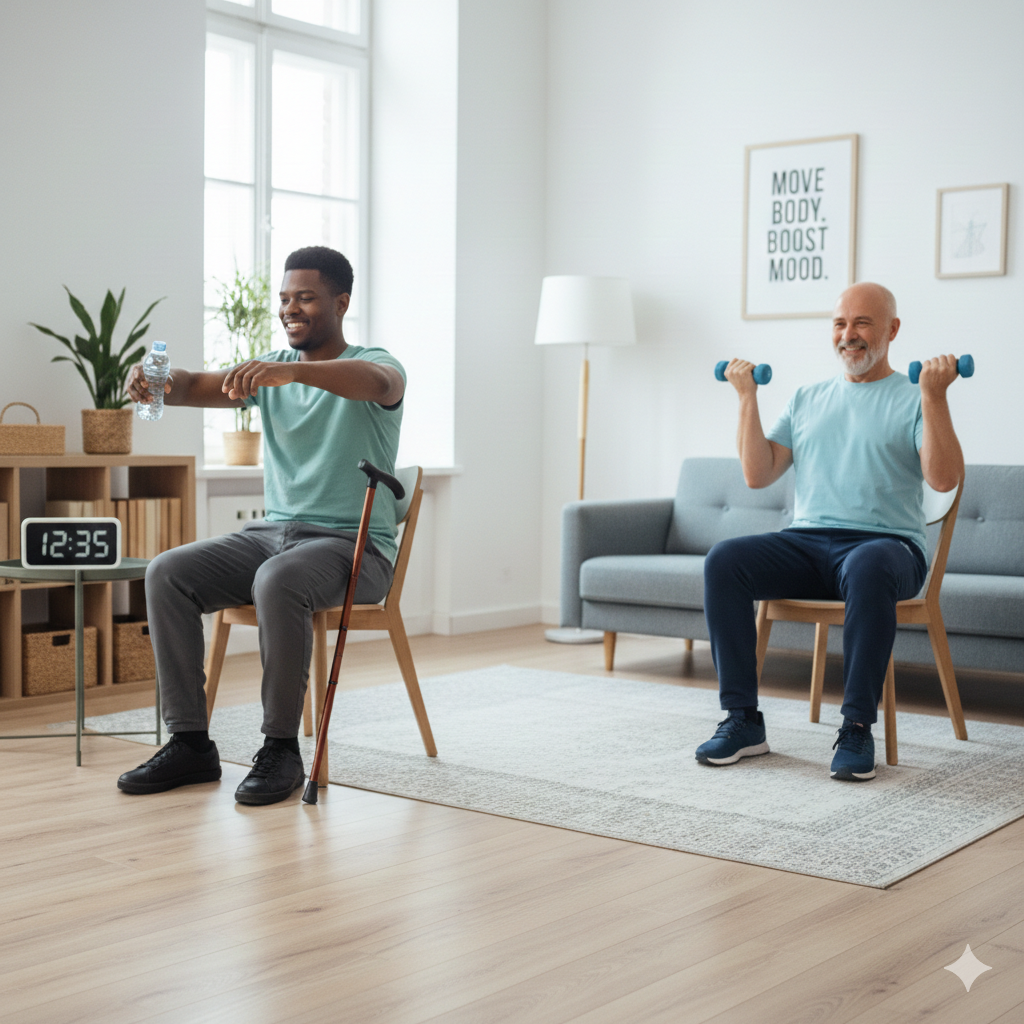
If you’ve been wanting to start exercising but find traditional workouts intimidating or difficult, a chair workout for beginners at home might be exactly what you need. Whether you’re dealing with mobility limitations, recovering from an injury, or simply prefer a gentler approach to fitness, seated exercises offer an accessible and effective way to build strength, improve flexibility, and boost your overall health without ever leaving your chair.
Chair workouts have gained tremendous popularity because they’re inclusive, safe, and surprisingly effective. You don’t need expensive equipment, a gym membership, or even the ability to stand for long periods. All you need is a sturdy chair and the willingness to move your body. In this comprehensive guide, you’ll discover everything you need to know about starting your chair exercise journey, from basic movements to complete workout routines you can do daily.
What Is a Chair Workout and Who Can Benefit?
A chair workout consists of exercises performed while sitting on or using a chair for support. These movements target all major muscle groups including your arms, legs, core, and back, providing a full-body workout experience without the need to get down on the floor or perform high-impact movements.
Who Should Consider Chair Workouts?
Chair exercises aren’t just for one specific group—they’re beneficial for many people:
- Seniors looking to maintain independence and mobility
- Beginners who are new to exercise and want to build confidence
- Individuals with obesity seeking a low-impact starting point
- People with joint pain or arthritis who need gentler movement options
- Those recovering from injuries or surgeries
- Office workers wanting to stay active during the workday
- Anyone with balance issues or limited mobility
The beauty of seated exercise for weight loss and overall fitness is that it meets you where you are, regardless of your current fitness level.
Health Benefits of Regular Chair Exercises
Don’t let the simplicity fool you—chair workouts deliver real results. Research shows that regular seated exercise can improve cardiovascular health, strengthen muscles, enhance flexibility, and boost mental wellbeing.
Physical Benefits
Improved Strength and Endurance: Chair exercises for weak legs and upper body movements help build muscle strength gradually and safely. Over time, you’ll notice everyday tasks becoming easier.
Better Balance and Coordination: A seated workout for balance and mobility works your stabilizing muscles and improves body awareness, reducing fall risk.
Weight Management: A seated cardio workout for beginners can burn calories and support weight loss goals when combined with healthy eating habits.
Joint Health: Low-impact movements lubricate joints and reduce stiffness without causing additional stress or pain, making them ideal for those dealing with knee pain or joint pain.
Enhanced Flexibility: Regular movement through a full range of motion maintains and improves flexibility, helping you move more comfortably in daily life.
Mental and Emotional Benefits
Exercise isn’t just about physical health. Chair workouts can also:
- Reduce stress and anxiety
- Improve mood through endorphin release
- Boost cognitive function and memory
- Increase energy levels throughout the day
- Improve sleep quality
- Build confidence in your physical abilities
Getting Started: What You Need for Chair Workouts
One of the best things about a chair workout for obese beginners or anyone else is how little equipment you need.
Essential Equipment
A Sturdy Chair: Choose a chair without wheels that won’t slide. The seat should be firm, and the chair should support your weight comfortably. Kitchen or dining chairs work perfectly.
Comfortable Clothing: Wear loose, breathable clothes that allow free movement. Avoid anything restrictive around your arms, shoulders, or legs.
Supportive Footwear: Athletic shoes with good support are ideal, though you can also work out in socks on a non-slip surface.
Optional Equipment
While not necessary, these items can add variety to your routine:
- Light hand weights or water bottles (1-3 pounds to start)
- Resistance bands
- A small towel for stretching
- A yoga mat if you choose to do some floor-based cool-down stretches
Safety Tips Before You Begin
Safety should always come first when starting any new exercise program.
Consult Your Doctor: If you have any health conditions, have been inactive for a while, or have concerns about exercise, talk to your healthcare provider before beginning.
Start Slowly: Begin with just 5-10 minutes and gradually increase as your fitness improves. There’s no rush.
Listen to Your Body: Some muscle fatigue is normal, but sharp pain is not. Stop any exercise that causes pain and modify as needed.
Maintain Proper Posture: Sit up straight with your feet flat on the floor, core engaged, and shoulders relaxed. Good posture prevents strain and maximizes benefits.
Breathe Properly: Never hold your breath. Exhale during exertion and inhale during the easier part of each movement.
Stay Hydrated: Keep water nearby and take sips throughout your workout.
Complete 20-Minute Chair Workout Routine for Beginners
This chair exercise routine for daily use provides a balanced full-body workout. Perform each exercise for 30-60 seconds, or complete 10-15 repetitions, then rest for 15-30 seconds before moving to the next exercise.
Warm-Up (3-4 Minutes)
Seated Marching: Sit tall and lift one knee, then the other, as if marching in place. Swing your arms naturally. This gentle movement increases blood flow and prepares your body for exercise.
Shoulder Rolls: Roll your shoulders backward in large circles 10 times, then forward 10 times. This releases tension and warms up your upper body.
Ankle Circles: Lift one foot slightly and rotate your ankle in circles—10 clockwise, 10 counterclockwise. Repeat with the other foot.
Upper Body Exercises (5 Minutes)
Seated Arm Circles: Extend arms out to the sides at shoulder height. Make small circles forward for 30 seconds, then backward for 30 seconds. This strengthens shoulders and improves mobility.
Bicep Curls: Hold water bottles or light weights (or just use your fists). With palms facing up, curl your hands toward your shoulders, squeezing your biceps. Lower slowly and repeat.
Overhead Reach: Reach both arms overhead, alternating reaching higher with each arm as if climbing a rope. This engages your core and shoulders.
Seated Push-Ups: Place hands on the armrests or seat beside your hips. Press down to lift your bottom slightly off the seat. This builds arm and core strength.
Core Exercises (4 Minutes)
Seated Torso Twists: Sit tall, place hands behind your head, and gently rotate your torso to the right, then left. Keep your hips facing forward. This works your obliques.
Seated Forward Bend: Hinge at your hips and reach toward your toes, keeping your back straight. Return to sitting tall. This engages your core and stretches your lower back.
Seated Knee Lifts: Lift one knee toward your chest, hold briefly, then lower. Alternate legs. For added challenge, lift both knees together.
Side Reaches: Reach one arm up and over toward the opposite side, creating a side bend. Feel the stretch along your side body. Alternate sides.
Lower Body Exercises (5 Minutes)
Seated Leg Extensions: Extend one leg straight out in front of you, hold for a second, then lower without touching the floor. Alternate legs. This is excellent for chair exercises for weak legs.
Seated Squats: Sit near the front of your chair, stand up without using your hands if possible, then sit back down with control. This builds leg strength and functional fitness.
Heel Raises: Keep toes on the ground and lift both heels as high as possible. Lower and repeat. This strengthens calves and ankles.
Toe Taps: Keep heels on the ground and lift your toes, then tap them back down. This works your shin muscles and improves ankle flexibility.
Inner Thigh Squeezes: Place a small pillow or rolled towel between your knees. Squeeze your knees together, hold for 3-5 seconds, then release.
Cool-Down Stretches (3-4 Minutes)
Neck Stretches: Gently tilt your head toward one shoulder, hold for 15 seconds, then switch sides. Roll your head forward, but avoid rolling backward.
Chest Opener: Clasp hands behind your back and gently lift your arms while squeezing shoulder blades together. Hold for 20-30 seconds.
Seated Hamstring Stretch: Extend one leg forward with heel on the floor. Hinge forward at the hips until you feel a gentle stretch. Hold for 20-30 seconds per leg.
Seated Spinal Twist: Cross one leg over the other, place opposite elbow outside the crossed knee, and gently twist. Hold for 20-30 seconds each side.
Chair Cardio Workout for Fat Loss
If your goal includes weight management, incorporating a seated cardio workout for beginners into your routine can help burn additional calories.
High-Energy Seated Cardio Moves
Speed Marching: March your feet as quickly as you can while pumping your arms vigorously. Maintain good posture throughout.
Seated Jacks: Move your legs out and in (similar to jumping jacks, but seated) while raising and lowering your arms overhead.
Punches and Crosses: Alternate punching forward, then cross your body with each punch. Add some torso rotation for extra engagement.
Knee to Opposite Elbow: Lift your right knee while bringing your left elbow down to meet it. Alternate sides at a steady pace.
Perform each cardio move for 30-45 seconds with 15 seconds rest between exercises. Repeat the circuit 2-3 times for an effective calorie-burning session.
Chair Exercises for Specific Conditions
Chair Workout for Knee Pain
Focus on exercises that strengthen the muscles around your knees without bending them excessively:
- Seated leg lifts (straight leg raises)
- Ankle pumps and circles
- Gentle hamstring stretches
- Quadriceps contractions (tightening the muscle without moving the joint)
Chair Workout for Joint Pain
Choose gentle, controlled movements that maintain mobility without aggravating inflammation:
- Slow, deliberate movements through pain-free range of motion
- Hold each stretch for longer periods (20-30 seconds)
- Focus on gentle strengthening rather than cardio intensity
- Include exercises that promote circulation to affected areas
Chair Exercises for Parkinson’s Disease
While always working under medical supervision, beneficial movements include:
- Large, exaggerated movements to counter rigidity
- Balance exercises with chair support
- Coordination exercises that challenge fine motor control
- Flexibility work to maintain range of motion
Creating Your Weekly Chair Exercise Schedule
Consistency matters more than intensity when building a sustainable fitness habit.
Sample Weekly Routine
Monday: Full-body chair workout (20 minutes)
Tuesday: Seated cardio focus (15 minutes)
Wednesday: Chair yoga for flexibility (20 minutes)
Thursday: Rest or gentle stretching
Friday: Full-body chair workout (20 minutes)
Saturday: Seated cardio or longer workout (25-30 minutes)
Sunday: Rest or chair yoga
Remember, this is just a template. Adjust based on your energy levels, schedule, and how your body responds.
Tips for Staying Motivated
Starting is one thing—sticking with it is another. Here’s how to maintain your commitment:
Set Realistic Goals: Rather than “lose 50 pounds,” try “complete three workouts this week.” Small wins build momentum.
Track Your Progress: Keep a simple log of workouts completed. Seeing your consistency on paper is motivating.
Find an Exercise Buddy: Working out with a friend, even virtually, adds accountability and makes exercise more enjoyable.
Vary Your Routine: Mix different types of chair workouts to prevent boredom. Try chair yoga one day and cardio the next.
Celebrate Milestones: Completed your first week? Two weeks? A month? Acknowledge these achievements.
Focus on How You Feel: Pay attention to increased energy, better sleep, improved mood, and greater ease in daily activities.
Frequently Asked Questions
Can you really lose weight with chair exercises?
Yes, you can lose weight with chair exercises when combined with a healthy diet. While they may burn fewer calories than high-intensity workouts, consistent seated exercise increases your metabolism, builds muscle, and contributes to a calorie deficit. Any movement is better than no movement, and chair workouts are sustainable for many people who might otherwise remain sedentary.
How long should beginners do chair exercises?
Beginners should start with just 5-10 minutes daily and gradually increase to 20-30 minutes as fitness improves. It’s better to do shorter workouts consistently than to overdo it initially and burn out. Listen to your body and progress at your own pace.
Are chair workouts effective for seniors?
Absolutely. Chair workouts are particularly effective for seniors because they reduce fall risk while still providing muscle strengthening, cardiovascular benefits, and improved flexibility. Many seniors find they can maintain independence longer when they engage in regular seated exercise.
What’s the difference between chair exercise and chair yoga?
Chair exercise typically focuses on strength, cardio, and functional movements, while chair yoga emphasizes flexibility, breathing, mindfulness, and gentle stretching. Both are beneficial, and many people incorporate elements of both into their routines for comprehensive wellness.
Can I do chair exercises every day?
Yes, gentle chair exercises can be done daily. However, if you’re doing more intense strength work, consider taking 1-2 rest days per week to allow muscles to recover. On rest days, you can still do gentle stretching or chair yoga.
Do I need weights for chair workouts?
No, weights are optional. Bodyweight resistance provides enough challenge for beginners. As you get stronger, you can add light weights, resistance bands, or even household items like water bottles to increase difficulty.
How can I make chair exercises more challenging?
Progress your workouts by increasing repetitions, adding resistance (weights or bands), holding positions longer, moving more slowly with control, or reducing rest time between exercises. You can also progress to exercises that require more balance or coordination.
Conclusion
A chair workout for beginners at home offers an accessible, safe, and effective path to better health and fitness. Whether you’re managing a health condition, building strength after a period of inactivity, or simply prefer seated exercise, these workouts can transform your physical and mental wellbeing.
The key to success is consistency, not perfection. Start where you are, use what you have, and do what you can. Even just 10 minutes of movement several times a week makes a meaningful difference in your strength, flexibility, mobility, and overall health.
Remember that every expert was once a beginner. Every person who has successfully incorporated exercise into their life started with a single workout. Today can be your day one. Pull up a chair, set a timer for just 10 minutes, and begin your journey toward a healthier, more active you. Your future self will thank you for starting today.
Whether you choose a seated cardio workout for beginners, chair yoga for flexibility, or strength-building exercises for weak legs, the important thing is that you move your body regularly and with intention. Here’s to your health, your strength, and your commitment to taking care of yourself—one chair workout at a time.