Starting a workout routine is exciting. You feel motivated, energized, and ready to transform your life. But then, a few weeks pass. That initial spark fades. Your sneakers gather dust, and the gym membership becomes another monthly expense you barely think about.
Sound familiar? You’re not alone. Studies show that nearly 80% of people who start an exercise routine abandon it within the first six months. The problem isn’t laziness or lack of willpower—it’s that most people don’t know how to make exercise a habit that actually sticks.
The good news? Building a sustainable fitness routine doesn’t require superhuman discipline. With the right strategies, you can transform sporadic workouts into an automatic part of your daily life. This guide will show you exactly how to create an exercise habit that lasts, using proven techniques backed by behavioral science and real-world success stories.
Understanding the Science Behind Exercise Habits
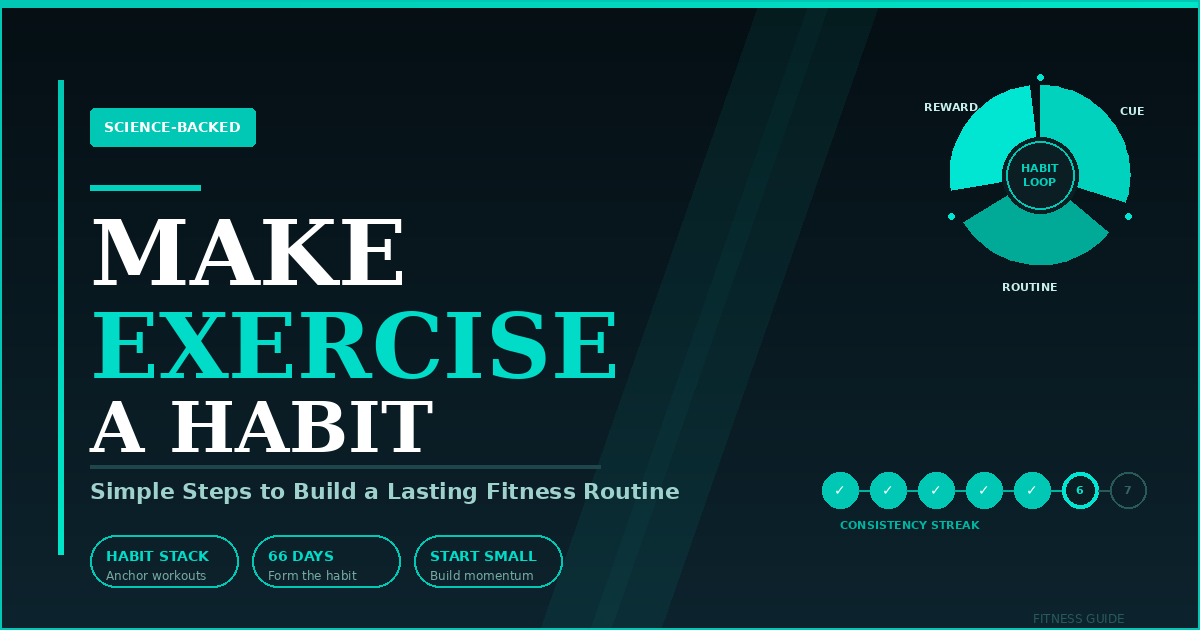
Before diving into practical strategies, it’s helpful to understand how habits actually form. According to behavioral psychologist James Clear, every habit follows a simple loop: cue, routine, and reward.
When you repeat this cycle consistently, your brain starts to automate the behavior. Eventually, the action becomes as natural as brushing your teeth or making your morning coffee. The key is setting up this loop intentionally for your workouts.
Research published in the European Journal of Social Psychology found that it takes an average of 66 days for a new behavior to become automatic. Some people form habits faster, others slower—but the principle remains the same: consistency trumps intensity every single time.
Start Small and Build Gradually
One of the biggest mistakes people make when starting an exercise routine is going too hard, too fast. They commit to hour-long workouts six days a week, only to burn out within a month.
Instead, begin with ridiculously small goals. We’re talking 5 to 10 minutes of movement per day. This might feel insignificant, but it’s exactly this “too easy to fail” approach that makes it work.
Why starting small works:
- Removes the mental barrier of “not having enough time”
- Prevents physical burnout and injury
- Builds confidence through consistent wins
- Creates momentum that naturally expands over time
Start with a simple 10-minute daily exercise habit focused on activities you genuinely enjoy. Maybe it’s a quick yoga flow, a brisk walk around the block, or a short bodyweight circuit. Once this becomes automatic, you can gradually increase duration and intensity.
Use Habit Stacking to Anchor Your Workouts
Habit stacking for fitness is one of the most powerful techniques for building consistency. The concept is simple: attach your new exercise habit to an existing daily behavior.
Here’s how it works: identify something you already do every day without thinking—like brewing coffee, finishing lunch, or brushing your teeth in the evening. Then, stack your workout immediately before or after this existing habit.
Practical habit stacking examples:
- After I pour my morning coffee, I will do 10 squats
- Before I take my lunch break, I will walk for 15 minutes
- Right after I get home from work, I will change into workout clothes
- Immediately after dinner, I will stretch for 10 minutes
The existing habit serves as a natural cue that triggers your workout. This eliminates decision fatigue and makes showing up effortless.
Create a Workout Schedule That Actually Works
Planning is essential, but your schedule needs to be realistic. Don’t create an ambitious calendar that looks impressive on paper but impossible to maintain in real life.
Look at your actual week—where do you genuinely have pockets of available time? Be honest about your energy levels too. If you’re not a morning person, don’t schedule 6 AM workouts. You’re setting yourself up for failure.
Tips to schedule workouts effectively:
- Pick specific times: “I’ll exercise sometime today” rarely happens. “I’ll work out at 7 AM before breakfast” is concrete and actionable.
- Block it on your calendar: Treat workout time like an important meeting. Put it in your digital calendar with reminders.
- Prepare the night before: Lay out your workout clothes, fill your water bottle, and remove any friction that might prevent you from following through.
- Start with 3 days per week: This frequency is enough to build momentum without overwhelming your schedule.
- Choose the same time slot: Consistency helps solidify the habit faster than varying times.
Make Your Workouts Enjoyable
If you dread your exercise routine, you won’t stick with it long-term. Period. The best workout is the one you’ll actually do—and that means finding ways to make workouts fun at home or wherever you exercise.
Stop forcing yourself to do activities you hate just because they’re “supposed to” be effective. There are countless ways to move your body. Experiment until you find something that genuinely brings you joy.
Ideas to make exercise more enjoyable:
- Create an energizing playlist with your favorite upbeat songs
- Watch entertaining shows or listen to podcasts during cardio
- Exercise outdoors to enjoy nature and fresh air
- Join virtual classes or communities for social connection
- Try new activities regularly to prevent boredom
- Exercise with a friend or family member
- Set fun challenges like learning to do a handstand or run a certain distance
Remember, beginner exercise motivation often comes from enjoying the process, not just chasing results.
Build in Accountability Systems
Accountability is a game-changer for consistency. When you know someone is watching or expecting you to show up, you’re far more likely to follow through.
Effective exercise accountability tips:
- Find a workout buddy: Commit to exercising together at specific times. You won’t want to let them down.
- Join online communities: Share your progress in fitness groups on social media or apps.
- Hire a coach or trainer: Even occasional check-ins create external pressure to stay consistent.
- Use habit tracking apps: Apps like Streaks or Habitica turn consistency into a game you want to win.
- Make a public commitment: Tell friends and family about your fitness goals. Social pressure can be surprisingly motivating.
- Post your workouts: Share completion photos or updates on social media to create gentle peer pressure.
The key is finding the accountability method that resonates with you personally. Some people thrive with public accountability, while others prefer private tracking.
Reward Yourself for Showing Up
Small rewards for fitness goals create positive reinforcement that strengthens your habit loop. Your brain releases dopamine when you receive a reward, which makes you want to repeat the behavior.
The trick is choosing rewards that don’t contradict your fitness goals. Skip the pizza or ice cream celebration after every workout. Instead, pick non-food rewards that feel genuinely satisfying.
Healthy reward ideas:
- Watch your favorite show only after exercising
- Enjoy a relaxing bath or shower
- Buy new workout gear after hitting weekly goals
- Schedule a massage or spa treatment monthly
- Allow guilt-free leisure time after workouts
- Track progress visibly with stars or checkmarks
- Celebrate milestones with experiences you enjoy
Immediate rewards work better than distant ones. Don’t wait until you’ve lost 20 pounds to treat yourself—reward the daily behavior, not just the outcome.
Overcome Common Obstacles
Even with the best strategies, obstacles will arise. The difference between people who maintain exercise habits and those who don’t is how they respond to these challenges.
“I don’t have time”
This is the most common excuse, but time is rarely the real issue. Start with short workout habits that take just 5-15 minutes. These micro-sessions fit into the busiest schedules and maintain your consistency streak even on hectic days.
“I’m too tired”
Counterintuitively, movement often boosts energy. Commit to just starting—do the first 5 minutes. If you’re still exhausted, stop. Most times, you’ll find energy appears once you begin.
“I missed a day”
One missed workout doesn’t destroy your habit. Get back on track immediately rather than waiting for Monday or next month. The “all or nothing” mindset is your enemy.
“I’m not seeing results fast enough”
Shift your focus from outcomes to the process. Measure success by consistency (did you show up?) rather than only physical changes. Results always lag behind effort.
Create an Environment That Supports Success
Your environment dramatically influences your behavior. Design your space to make exercise the path of least resistance.
Environmental design strategies:
- Keep workout equipment visible and easily accessible
- Set out your exercise clothes the night before
- Remove temptations that compete with workout time
- Create a dedicated workout space, even if it’s small
- Make unhelpful choices inconvenient (put the TV remote far away)
- Surround yourself with fitness-oriented friends and content
When healthy choices are easy and unhealthy choices require effort, you naturally gravitate toward better decisions.
Track Your Progress Meaningfully
What gets measured gets managed. Tracking provides visible proof of your consistency, which builds confidence and motivation.
Effective tracking methods:
- Mark an X on a calendar for each completed workout
- Use fitness apps to log activities automatically
- Take weekly progress photos from the same angle
- Journal about how exercise makes you feel
- Record workout details in a simple notebook
- Create a visual habit tracker on your wall
Focus on tracking behaviors (did you work out?) rather than only outcomes (pounds lost). Behavior is within your control; results aren’t always immediate.
Frequently Asked Questions
How long does it take to make exercise a habit?
Research suggests it takes approximately 66 days on average for a new behavior to become automatic, though this varies from person to person. Some people form exercise habits in as little as 21 days, while others need 3-4 months. The key is focusing on daily consistency rather than watching the calendar. Once exercise feels natural and you do it without much conscious thought, the habit has formed.
What’s the best time of day to exercise for building a habit?
The best time is whichever time you’ll consistently stick to. Morning workouts work well for many people because they eliminate decision fatigue and prevent other obligations from interfering. However, if you’re not a morning person, forcing early workouts may backfire. Choose a time that aligns with your natural energy levels and daily schedule. Consistency at a specific time matters more than the actual hour.
How can I stay motivated when I don’t see immediate results?
Focus on process goals rather than outcome goals. Celebrate showing up and completing workouts regardless of physical changes. Remember that internal benefits—better sleep, improved mood, increased energy, reduced stress—often appear before visible physical transformations. Additionally, take progress photos and measurements monthly rather than weekly to see genuine changes over time.
What should I do if I skip a workout?
Don’t let one missed session derail your entire routine. Missing occasionally is normal and doesn’t erase your progress. The important thing is getting back on track immediately—the very next scheduled workout. Avoid the “I’ve already ruined it” mentality that leads to abandoning the habit entirely. One skipped workout is a minor blip; giving up is the actual problem.
How do I make exercise a priority when I have a busy schedule?
Start with short workout habits that require minimal time commitment—even 10 minutes counts. Schedule workouts like appointments, blocking the time in your calendar. Prepare everything the night before to eliminate morning friction. Consider exercise non-negotiable “me time” that’s essential for your mental and physical health, not a luxury to fit in if convenient.
Can I build an exercise habit without going to the gym?
Absolutely. Home workouts, outdoor activities, bodyweight exercises, yoga, walking, and online fitness classes all build sustainable exercise habits. The gym is one option, not a requirement. Many people find it easier to maintain consistency with at-home routines since they eliminate commute time and scheduling around gym hours.
What if I get bored with my workout routine?
Boredom is common and signals it’s time for variety. Try new activities, change your workout playlist, explore different classes, or exercise in new locations. However, maintain your core habit structure—keep the same time slot and basic commitment while varying the specific activity. This preserves consistency while keeping things fresh.
Conclusion
Learning how to make exercise a habit doesn’t require extraordinary willpower or dramatic lifestyle overhauls. It’s about implementing simple, science-backed strategies that make consistency inevitable.
Start small with manageable goals, use habit stacking to anchor workouts to existing routines, and create a realistic schedule that fits your actual life. Make your exercise sessions genuinely enjoyable, build accountability into your system, and reward yourself for showing up consistently.
Remember, the goal isn’t perfection—it’s progress. Some days you’ll crush your workout, other days you’ll barely get through it. Both count as wins because you showed up. That consistency, repeated over weeks and months, transforms sporadic exercise into an unshakeable habit.
The transformation happens not through intensity, but through repetition. Your future self will thank you for starting today, no matter how small that start might be. So lace up those sneakers, set your first tiny goal, and begin building the exercise habit that will change your life one workout at a time.