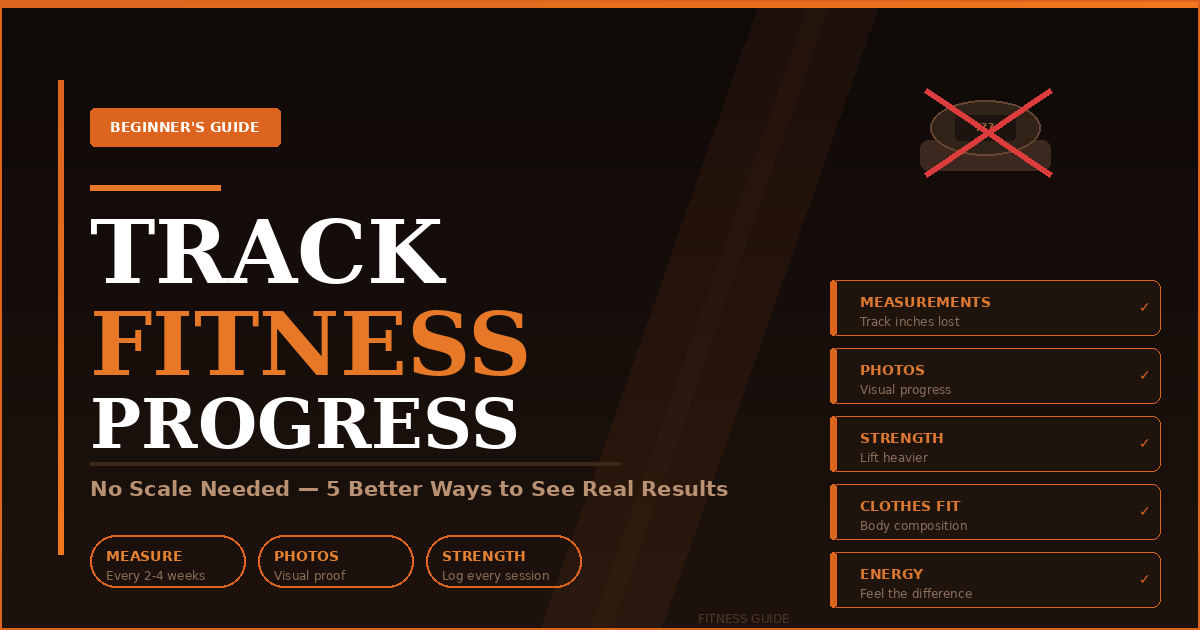
Stepping on the scale every morning can feel like rolling dice with your emotions. One day you’re up two pounds, the next you’re down one, and by the end of the week, you’re questioning whether your workouts are even working. If you’ve ever felt frustrated by those unpredictable numbers, you’re not alone. The truth is, how to track fitness progress without a scale is one of the most important skills you can develop on your fitness journey.
Your scale only tells you one story—and it’s often misleading. Water retention, muscle gain, hormonal changes, and even what you ate for dinner can swing that number dramatically. Real fitness progress happens in your strength, endurance, energy levels, body composition, and how your clothes fit. In this guide, you’ll discover the best ways to measure fitness progress that actually reflect the hard work you’re putting in at the gym.
Why Tracking Fitness Progress Matters More Than You Think
Before diving into the methods, let’s talk about why tracking matters at all. When you’re working out consistently but not seeing results on paper (or in photos), motivation crashes. You start wondering if you should switch programs, eat less, or just give up entirely.
Tracking keeps you accountable and motivated. It shows you where you started and how far you’ve come. It helps you identify what’s working and what needs adjustment. Most importantly, it proves that progress isn’t always visible in the mirror right away.
The key is tracking the right things. Fitness progress tracking for beginners should focus on multiple data points, not just one. Think of it like checking the weather—you wouldn’t just look at temperature and ignore wind, humidity, and rain chances, right? Your body works the same way.
Best Ways to Measure Fitness Progress Beyond the Scale
1. Body Measurements: The Numbers That Actually Matter
Learning how to take body measurements for fitness is simple and incredibly revealing. Grab a soft measuring tape and track these areas every two to four weeks:
- Chest (measure around the fullest part)
- Waist (measure around your belly button)
- Hips (measure around the widest part)
- Thighs (measure around the thickest part of each leg)
- Arms (measure around the bicep at its largest point)
Why this works: You might gain muscle in your legs and lose fat around your waist simultaneously. The scale might stay the same, but your measurements tell the real story. Many people find they’ve lost several inches even when their weight barely budged.
Pro tip: Always measure at the same time of day (preferably morning, before eating) and in the same spots. Take notes or use a simple tracking sheet so you can compare over time.
2. Progress Photos: Visual Evidence You Can’t Ignore
If you’ve ever wondered about progress photos tips for fitness, here’s the golden rule: consistency is everything. Take photos every two to four weeks under identical conditions:
- Same lighting (natural light works best)
- Same time of day (morning is ideal)
- Same clothing (or similar tight-fitting clothes)
- Same angles (front, side, back)
- Same location in your home
Place photos side-by-side after 8–12 weeks. The changes you couldn’t see day-to-day become obvious when compared directly. Your brain adapts to seeing your reflection daily, but photos freeze moments in time for honest comparison.
Many people skip progress photos because they feel self-conscious. Push through that discomfort—these photos are for you, not social media. They become your most powerful motivational tool when you hit plateaus.
3. Strength Gains: The Ultimate Performance Metric
One of the most satisfying ways to track strength gains is logging your workouts. Keep a simple journal or use your phone’s notes app to record:
- Exercises performed
- Weight lifted
- Number of sets and reps
- How you felt during the workout
Can you squat 20 pounds more than you could two months ago? Can you do three more push-ups than when you started? Are you lifting the same weight but with better form? All of these signal real progress.
Example: If you started doing dumbbell chest presses with 15-pound weights for 8 reps, and now you’re using 25-pound weights for 10 reps, you’ve made tremendous strength gains—regardless of what the scale says.
4. Endurance and Performance Improvements
Fitness isn’t just about looking different; it’s about doing more. Track improvements in:
- How long you can run without stopping
- How many floors you can climb without getting winded
- How quickly you recover between sets
- Whether daily activities (carrying groceries, playing with kids) feel easier
These exercise progress tracking ideas show functional fitness improvements. Maybe you couldn’t jog for 5 minutes straight when you started, but now you’re running 20 minutes comfortably. That’s massive progress the scale will never show you.
5. How Your Clothes Fit
This might sound simple, but it’s one of the most honest indicators. Keep a pair of “goal jeans” or a shirt that fits snugly. Try them on monthly and notice:
- Are they looser around the waist?
- Do they fit more comfortably in the thighs?
- Can you button them more easily?
Clothing doesn’t lie. Even if your weight stays stable, shifting body composition (more muscle, less fat) changes how clothes drape on your frame. Many people drop two pant sizes while losing only 10 pounds because muscle takes up less space than fat.
How Often Should You Track Fitness Progress?
Here’s where beginners often make mistakes—they track too often or not enough.
Daily tracking causes unnecessary stress. Your body fluctuates too much day-to-day for meaningful data.
Weekly tracking works for some metrics (like workout performance), but body measurements and photos need more time to show changes.
The sweet spot: Track measurements and photos every 2–4 weeks. Log workouts after each session. This frequency gives your body time to adapt while keeping you engaged with your progress.
Best Fitness Tracker Apps for Progress (Non-Scale Options)
While you don’t need technology to track fitness progress at home, apps can make life easier:
- Strong or JEFIT for logging strength workouts
- MyFitnessPal for tracking nutrition alongside fitness
- Fitbod for personalized workout plans with built-in tracking
- Progress for organizing progress photos with calendar views
- Google Sheets or Excel for custom tracking (completely free)
Choose apps that focus on what matters to you. If you love seeing strength numbers climb, use a workout logger. If you’re visual, stick with a photo-tracking app. Don’t overwhelm yourself with five different tools—pick one or two and use them consistently.
Fitness Progress Journal Ideas for Non-Tech Users
Prefer pen and paper? A fitness progress journal can be incredibly therapeutic. Create sections for:
- Weekly workout log (exercises, weights, reps)
- Monthly measurements (waist, hips, arms, etc.)
- Energy and mood notes (how you felt during workouts)
- Nutrition highlights (not calorie counting, just general observations)
- Wins and challenges (both physical and mental victories)
Writing by hand helps you process your journey more deeply. You’ll spot patterns—like noticing you always feel stronger on days you sleep 8 hours or that you recover faster when you stretch consistently.
What to Track Besides Scale Weight
Let’s recap the metrics that paint a complete picture of your fitness progress:
- Body measurements (inches lost or gained in specific areas)
- Progress photos (visual proof of body composition changes)
- Strength performance (weight lifted, reps completed, form improvements)
- Endurance milestones (running distance, stairs climbed, recovery time)
- How clothes fit (real-world indicator of body changes)
- Energy levels (do you feel stronger throughout the day?)
- Sleep quality (fitness impacts rest, and rest impacts fitness)
- Mood and confidence (mental health gains are real gains)
When you track multiple metrics, you’re nearly guaranteed to see progress in something every month. This keeps motivation high even during plateau periods.
How Do I Know If I’m Making Fitness Progress?
Sometimes progress feels invisible. You’re showing up, working hard, but doubting whether anything’s changing. Here’s how to know you’re on the right track:
- You’re completing workouts that felt impossible a month ago
- You’re less sore after the same exercises
- Your resting heart rate is lower
- You sleep better at night
- You have more energy during the day
- People are commenting on your appearance (even if you don’t see it yet)
Progress isn’t always linear. Some weeks you’ll feel like a superhero; other weeks you’ll struggle. Track your trends over months, not days. That’s where the magic reveals itself.
Common Mistakes When Tracking Fitness Progress
Mistake #1: Comparing Yourself to Others
Your fitness journey is yours alone. Someone else might lose 20 pounds in three months while you lose 8—but they might have more weight to lose, different genetics, or more time to dedicate. Focus on beating your own records, not someone else’s highlight reel.
Mistake #2: Tracking Too Many Things at Once
Beginners often try to track weight, measurements, photos, macros, steps, sleep, water intake, and more. This leads to burnout. Start with two or three metrics that matter most to you, then add others if you want.
Mistake #3: Giving Up After a “Bad” Week
One week of higher measurements or lower performance doesn’t erase months of progress. Bodies are weird. Hormones, stress, sleep, and hydration all influence your data. Look at long-term trends, not single data points.
Frequently Asked Questions
How do I know if I’m making fitness progress without a scale?
Look for improvements in strength (lifting heavier weights), endurance (exercising longer without fatigue), body measurements (inches lost), how clothes fit, energy levels, and overall performance. Progress photos taken every 2–4 weeks also provide visual proof that the scale won’t show.
What should I track at the gym as a beginner?
Focus on tracking your exercises, weights used, sets, and reps. Also note how each workout feels—whether you’re getting stronger, recovering faster, or finding movements easier. Keep it simple: a basic workout journal or app with these details is enough.
How often should I take progress photos for fitness?
Take progress photos every 2–4 weeks. This gives your body enough time to show visible changes while keeping you motivated. Taking them more frequently can be discouraging since day-to-day changes are minimal.
What body parts should I measure for fitness tracking?
Measure your chest, waist (at belly button), hips, thighs, and upper arms. These areas show the most noticeable changes from fat loss and muscle gain. Always measure at the same time of day and same exact spots for accuracy.
Should I track fitness progress daily or weekly?
Avoid daily tracking—it causes unnecessary stress from normal body fluctuations. Weekly workout logs work well for performance, but save body measurements and photos for every 2–4 weeks to see meaningful changes.
What are the best non-scale fitness tracking apps?
Strong, JEFIT, and Fitbod are excellent for logging strength workouts. Progress is great for organizing photos. Google Sheets works if you want complete customization. Choose apps that focus on metrics you care about most.
How can I measure changes in muscle composition at home?
While precise body composition requires specialized equipment, you can estimate changes by tracking measurements, progress photos, strength gains, and how clothes fit. If measurements stay the same but you’re lifting heavier weights, you’re likely building muscle and losing fat simultaneously.
Conclusion: Progress Is More Than a Number
Learning how to track fitness progress without a scale transforms your entire relationship with fitness. Instead of obsessing over a single number that tells you almost nothing about your real health, you’ll celebrate strength gains, endurance improvements, measurement changes, and how amazing you feel in your own skin.
The best ways to measure fitness progress involve multiple metrics that show the complete picture of your transformation. Start with just two or three tracking methods—maybe body measurements, workout logs, and monthly progress photos. Stay consistent for at least 8–12 weeks before judging your results.
Remember, fitness is a lifelong journey, not a 30-day sprint. Every workout you complete, every healthy choice you make, and every small improvement you track builds toward the strongest, healthiest version of yourself. The scale might not always reflect that progress, but your body, mind, and performance will tell the real story.
Now grab that measuring tape, open your workout journal, or snap that first progress photo. Your future self will thank you for tracking what truly matters.