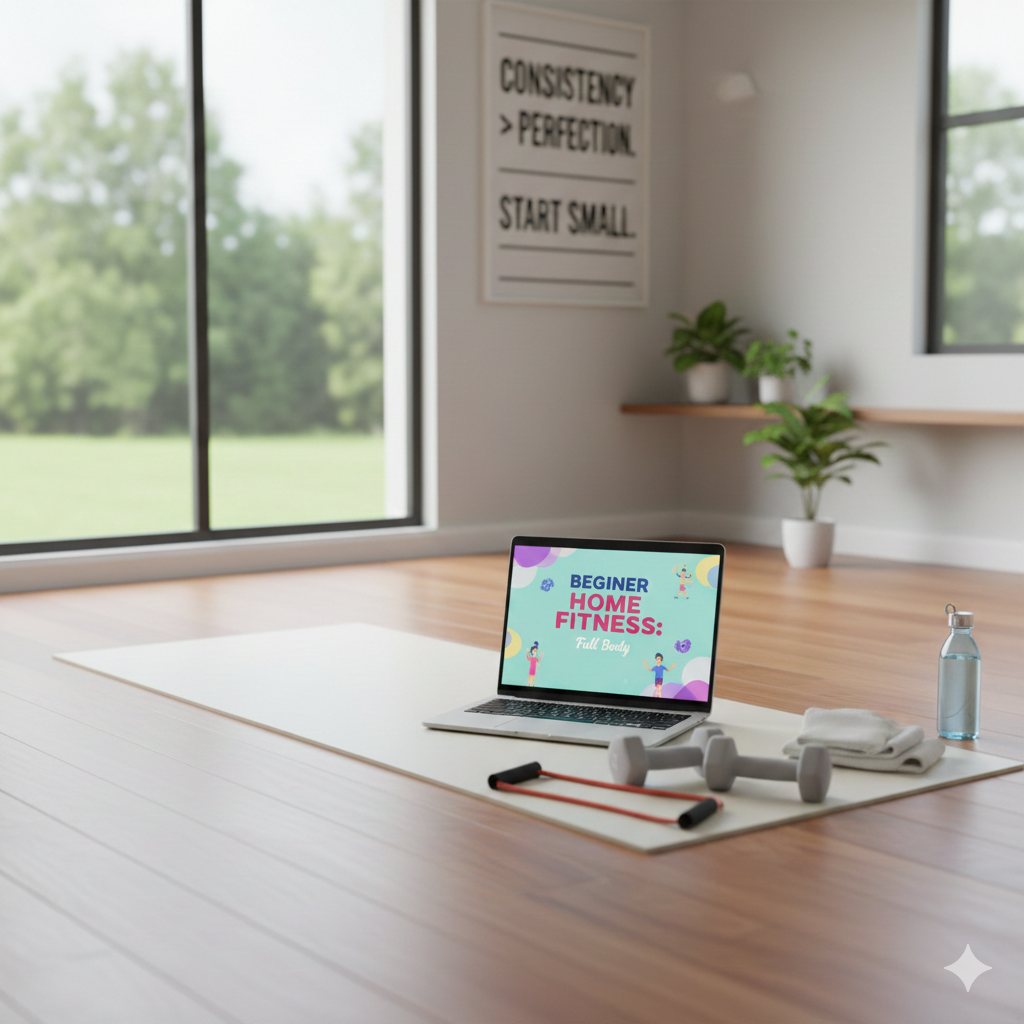
Starting a fitness journey can feel confusing, especially if you are new to exercise. Many beginners don’t know how to start working out, what exercises to do, or how long they should exercise. The good news is that you don’t need a gym, fancy equipment, or extreme workouts to get fit. With the right beginner workout routine, consistency, and safe habits, anyone can build a healthy lifestyle.
This guide will explain how to start exercising, create a home workout for beginners, and build a fitness program for beginners that is safe, effective, and easy to follow.
Why You Should Start Working Out
Exercise is not just about weight loss. Regular physical activity improves both physical and mental health.
Benefits of Exercise
- Improves heart health and stamina
- Helps with weight loss and fat loss
- Builds strength and muscle
- Boosts mood and reduces stress
- Improves sleep quality
- Increases energy levels
- Builds discipline and confidence
Whether your goal is how to get fit, lose weight, or feel healthier, exercise plays a key role.
Understanding Different Types of Exercise
Before starting an exercise routine for beginners, it helps to understand basic exercise types.
1. Aerobic Exercise (Cardio)
This includes activities that raise your heart rate:
- Walking
- Running
- Cycling
- Stationary bike workout
- Jumping jacks
Cardio workouts help burn calories and improve heart health.
2. Strength Training
Strength training builds muscle and improves metabolism:
- Bodyweight exercises
- Beginner strength training
- Calisthenics workout
3. Flexibility Exercises
These improve movement and reduce injury risk:
- Stretching
- Yoga
4. Balance and Stability Exercises
These help coordination and posture:
- Single-leg stands
- Core exercises
How to Start Working Out at Home
If you’re wondering how to start working out at home, keep it simple. Home workouts are perfect for beginners and require little to no equipment.
Key Rules for Beginners
- Start slow
- Focus on proper form
- Avoid pain (muscle burn is okay, pain is not)
- Rest when needed
- Be consistent
This approach ensures working out correctly and safely.
Home Workout for Beginners (No Equipment)
A no equipment workout is ideal for beginners. These exercises use your body weight and can be done anywhere.
Bodyweight Exercises for Beginners
- Squats
- Push-ups (wall or knee push-ups)
- Lunges
- Plank
- Glute bridges
- Jumping jacks
These bodyweight exercises help build full-body strength and burn fat.
Beginner Workout Routine at Home
Here is a workout routine at home designed for beginners.
Daily Workout Routine (20–30 Minutes)
Warm-Up (5 minutes)
- Arm circles
- March in place
- Light jumping jacks
Main Workout
- Squats – 3 sets of 10
- Push-ups – 3 sets of 5–10
- Lunges – 2 sets of 10 per leg
- Plank – 20–30 seconds
- Jumping jacks – 30 seconds
Cool-Down (5 minutes)
- Stretch legs, arms, and back
- Deep breathing
This is a simple home fitness routine you can do 4–6 days a week.
Full Body Workout at Home
A full body workout at home ensures all muscle groups are trained.
Benefits of Full Body Training
- Burns more calories
- Builds balanced strength
- Saves time
- Ideal for beginners
You can follow the same workout above or add:
- Mountain climbers
- Wall sits
- Chair dips
Beginner Cardio Workout at Home
Cardio is important for fat loss and heart health.
Cardio Workout at Home Options
- Walking for weight loss
- Cycling workout at home
- Stationary bike workout
- Beginner running routine
Start with 15–20 minutes and gradually increase.
Using a Stationary Bike for Beginners
A stationary bike workout is excellent if you want low-impact cardio.
Beginner Bike Routine
- 5 minutes easy pace
- 10 minutes moderate pace
- 2 minutes slow recovery
This is perfect for a beginner workout using stationary bike.
How Long Should Beginners Exercise?
Many beginners ask: How long should beginners exercise?
Simple Answer:
- Start with 20–30 minutes per day
- 4–5 days per week
- Increase time slowly
Consistency matters more than duration.
Safe Workout Routine for Teens
If you are a teenager, safety is extra important.
Safe Workout Tips for Teens
- Avoid heavy weights
- Focus on bodyweight exercises
- Learn correct form
- Rest properly
- Eat healthy
A safe workout routine for teens focuses on health, not extreme weight loss.
Exercise Routine for a 15-Year-Old Male
For a teen beginner:
- Bodyweight workouts
- Cardio like walking or cycling
- Stretching and rest days
This creates a healthy workout routine for beginners without risk.
Weight Loss and Fat Loss at Home
Exercise supports weight loss, but diet plays a major role.
Best Exercises to Lose Weight at Home
- Bodyweight workout for fat loss
- Cardio exercises at home
- Daily exercises for beginners at home
Fat Loss Tips
- Stay in a calorie deficit
- Combine strength + cardio
- Stay consistent
Remember: Exercise and weight loss work best together with proper nutrition.
Nutrition and Lifestyle for Beginners
Diet for Weight Loss
- Eat whole foods
- Avoid junk food and soda
- Control portions
Key Nutrition Tips
- Protein intake for beginners supports muscle
- Hydration and exercise go together
- Healthy eating for fitness boosts results
A healthy lifestyle includes sleep, movement, and balanced meals.
Warm-Up and Cool-Down Importance
Warm-Up Exercises
- Increase blood flow
- Reduce injury risk
Cool-Down Exercises
- Reduce soreness
- Improve flexibility
Never skip warm-up or cool-down.
Importance of Rest Days
Rest days help muscles recover and prevent burnout.
Importance of Rest Days
- Prevent injury
- Improve performance
- Support muscle growth
2 rest days per week are ideal.
Weekly Workout Plan for Beginners
1 Week Workout Routine
- Monday: Full body workout
- Tuesday: Cardio
- Wednesday: Rest
- Thursday: Strength training
- Friday: Cardio
- Saturday: Light workout or stretching
- Sunday: Rest
This creates a balanced beginner exercise schedule.
Staying Motivated and Consistent
Exercise Motivation Tips
- Set small goals
- Track progress
- Work out at the same time daily
- Choose exercises you enjoy
How to Build Exercise Habit
- Start small
- Be patient
- Focus on progress, not perfection
Exercise consistency is more important than intensity.
Fitness vs Weight Loss
Fitness is about:
- Strength
- Energy
- Health
- Confidence
Weight loss is just one benefit. Focus on long-term health, not just the scale.
Final Takeaway
Starting a workout routine doesn’t need to be complicated. With a simple beginner fitness plan, bodyweight exercises, and a consistent schedule, anyone can get fit at home. Focus on safety, proper form, nutrition, and rest.
Whether your goal is how to lose weight without gym, build strength, or improve health, the key is to start small and stay consistent.