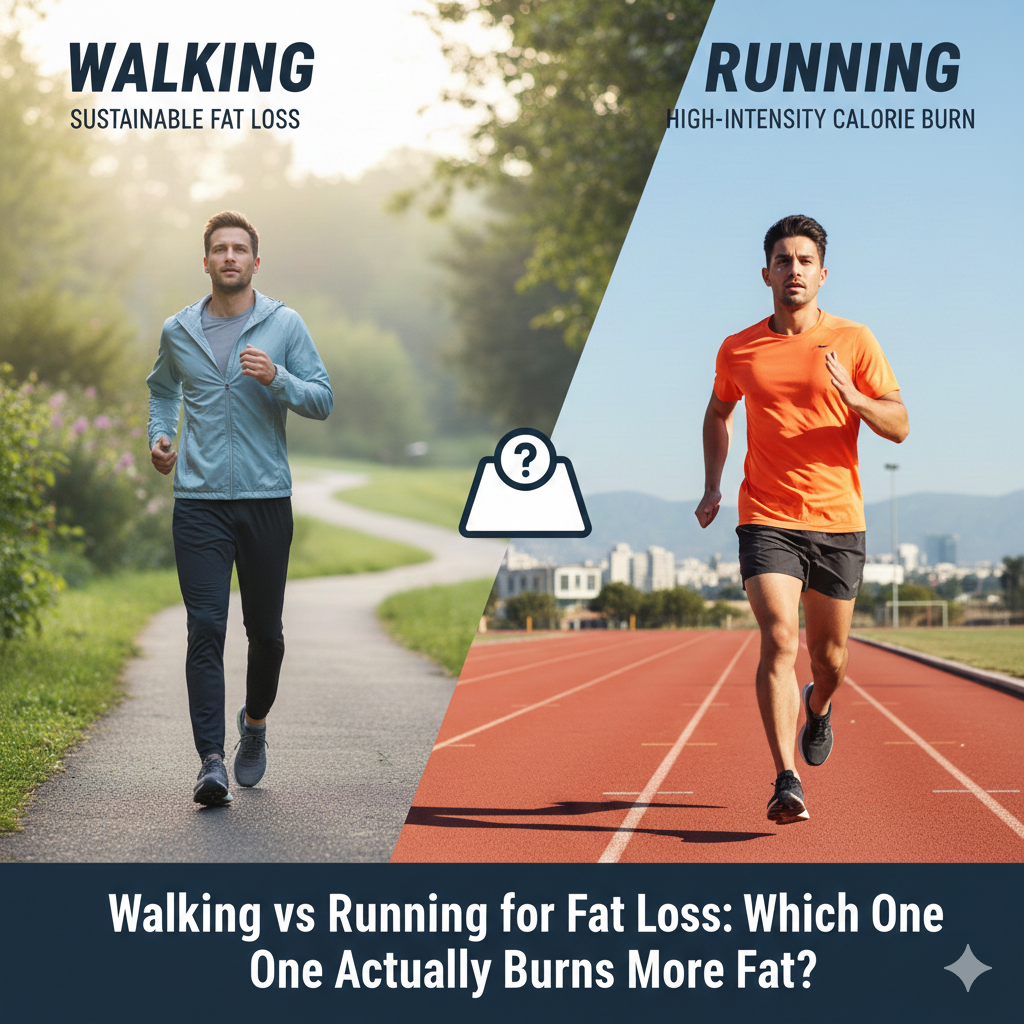
If you’ve ever wondered whether you should lace up your sneakers for a brisk walk or hit the pavement running to lose weight, you’re not alone. The walking vs running for fat loss debate has confused fitness enthusiasts for years. While running seems like the obvious winner for burning calories, walking offers surprising benefits that might make it the smarter choice for your fat loss journey. The truth is, both exercises can help you shed pounds, but the “best” option depends on your fitness level, body type, and long-term sustainability. In this comprehensive guide, we’ll break down the science, compare calorie burn, and help you decide which exercise will actually help you lose fat and keep it off.
Understanding How Fat Loss Actually Works
Before we dive into the walking versus running comparison, let’s clarify how your body burns fat. Fat loss occurs when you consistently burn more calories than you consume—creating what’s called a calorie deficit. Neither walking nor running magically melts fat away; instead, they increase your daily calorie expenditure, making it easier to achieve that deficit.
Your body uses different energy systems during exercise. During moderate-intensity activities like walking, your body primarily burns fat for fuel. During high-intensity exercises like running, you burn more carbohydrates in the moment but can continue burning calories at an elevated rate after your workout ends (known as the “afterburn effect” or EPOC).
The key takeaway? Both walking and running contribute to fat loss, but they do so through slightly different mechanisms.
Walking vs Running Calories Burned Comparison
Let’s address the elephant in the room: running burns more calories per minute than walking. According to exercise science research, here’s what a 155-pound person typically burns:
Running (6 mph pace):
- Approximately 372 calories in 30 minutes
- About 744 calories per hour
Walking (3.5 mph pace):
- Approximately 149 calories in 30 minutes
- About 298 calories per hour
Power walking (4.5 mph pace):
- Approximately 186 calories in 30 minutes
- About 372 calories per hour
At first glance, running appears to be the clear winner. However, this comparison doesn’t tell the whole story when it comes to sustainable fat loss.
Is Walking Better Than Running for Weight Loss?
Surprisingly, walking might actually be superior for many people trying to lose fat. Here’s why:
Sustainability and Consistency
The best exercise for fat loss isn’t the one that burns the most calories—it’s the one you’ll actually do consistently. Many people can walk for 60-90 minutes comfortably, but struggle to run for even 20 minutes. If you can walk for an hour daily (burning around 300 calories) versus running twice a week for 20 minutes (burning around 250 calories per session), walking wins the weekly calorie battle.
Lower Injury Risk
Walking is a low-impact exercise that places minimal stress on your joints, knees, and ankles. Running, especially for beginners or those carrying extra weight, significantly increases injury risk. An injury can derail your fat loss progress for weeks or months, making walking the safer long-term choice.
Better Fat-to-Muscle Preservation
During moderate-intensity walking, your body preferentially burns fat for fuel. While running burns more total calories, a higher percentage comes from carbohydrates and potentially muscle tissue, especially if you’re in a calorie deficit. For those focused specifically on fat loss rather than just weight loss, walking’s metabolic profile can be advantageous.
Can Walking Burn Belly Fat?
Yes, walking can definitely help you burn belly fat, but with an important caveat: you cannot spot-reduce fat from specific areas. When you create a calorie deficit through walking, your body will burn fat from all over, including your belly. Genetics determine where you lose fat first and last.
That said, consistent daily walking combined with a proper diet is proven to reduce overall body fat percentage, which naturally includes abdominal fat. Studies show that people who walk regularly experience meaningful reductions in waist circumference over time.
For maximum belly fat reduction through walking:
- Aim for at least 10,000 steps daily
- Include incline walking or hills when possible
- Maintain a brisk pace (you should be able to talk but not sing)
- Combine walking with strength training exercises
- Focus on your nutrition alongside your walking routine
Running vs Walking for Obese Beginners
If you’re significantly overweight or obese, walking is almost always the better starting point. Here’s why:
Joint Stress: Each running stride creates an impact force of approximately 2.5 times your body weight. For someone weighing 250 pounds, that’s over 600 pounds of force on your joints with each step. Walking reduces this impact to about 1.2 times your body weight.
Heart Rate Management: Obese beginners can quickly elevate their heart rate to an effective fat-burning zone through brisk walking alone, without the cardiovascular strain that running demands.
Adherence: Starting with walking builds confidence and establishes an exercise habit without overwhelming your body. You can gradually increase intensity by walking faster, adding inclines, or extending duration before transitioning to running if desired.
Immediate Results: Because you can do it longer and more frequently, walking often produces faster initial weight loss results for obese beginners compared to sporadic running attempts.
Incline Walking vs Running for Weight Loss
Incline walking deserves special mention as a powerful fat loss tool that bridges the gap between regular walking and running. Walking on a 10-15% incline can burn nearly as many calories as running on flat ground, while maintaining walking’s joint-friendly benefits.
Benefits of incline walking:
- Burns 50-70% more calories than flat walking
- Activates glutes and hamstrings more effectively
- Improves cardiovascular fitness
- Easier to sustain for longer durations than running
- Builds lower body strength while burning fat
Many people find that 30-45 minutes of incline walking (even on a treadmill at a 12% incline) provides an excellent fat-burning workout that they can perform daily without excessive fatigue or recovery needs.
The Fat Burning Zone: Walking vs Running
You’ve probably heard about the “fat-burning zone”—the heart rate range where your body supposedly burns the most fat. This concept is both true and misleading.
During lower-intensity exercise like walking (around 50-65% of max heart rate), your body does use a higher percentage of fat for fuel—approximately 50-60% of calories burned come from fat. During high-intensity running (70-85% of max heart rate), only about 35-40% of calories burned come from fat.
However, because running burns more total calories, you might still burn more absolute fat calories running for 20 minutes than walking for 20 minutes, despite the lower percentage.
The real advantage of walking’s fat-burning zone is that it allows you to exercise longer without fatigue, potentially burning more total fat calories over the course of your workout. A 60-minute walk might burn more total fat than a 25-minute run, even though the run burns more calories per minute.
Power Walking vs Running for Fat Loss
Power walking—walking at speeds of 4-5 mph with purposeful arm movement—offers a middle ground worth considering. It burns significantly more calories than casual walking while remaining much easier on your body than running.
Power walking advantages:
- Burns approximately 25-40% more calories than regular walking
- Engages core and upper body muscles
- Can be sustained for long periods
- Lower injury risk than running
- Effective for all fitness levels
For many people, power walking provides the “sweet spot” for fat loss: enough intensity to burn meaningful calories, but sustainable enough to do daily or near-daily.
Creating Your Optimal Fat Loss Walking Plan
If you’ve decided walking is your preferred fat loss method, here’s how to structure an effective program:
Week 1-2: Building the Habit
- Walk 20-30 minutes daily at a comfortable pace
- Focus on consistency over intensity
- Aim for 5,000-7,000 steps daily
Week 3-4: Increasing Volume
- Extend walks to 40-50 minutes
- Increase pace slightly (you should breathe heavier but can still talk)
- Target 8,000-10,000 steps daily
Week 5-8: Adding Intensity
- Include 2-3 incline walking sessions weekly
- Maintain 45-60 minute duration on most days
- Consistently achieve 10,000+ steps
- Add interval walking (alternating fast and moderate pace)
Long-term (Week 9+):
- Maintain 60+ minutes of walking most days
- Incorporate variety (hills, stairs, trails, intervals)
- Continue tracking steps and gradually increasing if plateaued
- Consider adding 1-2 days of running if desired and if body tolerates it well
When Running Might Be Better for Your Fat Loss
Despite walking’s many advantages, running does have specific benefits for certain individuals:
Time-efficient: If you only have 20-30 minutes to exercise, running burns significantly more calories in that timeframe.
Advanced fitness levels: If you’re already fit and not injury-prone, running provides a greater training stimulus and can help you break through fat loss plateaus.
Athletic goals: If you’re training for races or want to improve cardiovascular performance specifically, running is necessary.
Metabolic benefits: The afterburn effect from intense running can boost your metabolism for hours post-workout, burning additional calories throughout the day.
Preference: Some people genuinely enjoy running and find it mentally rewarding, which makes consistency easier.
Combining Walking and Running for Optimal Results
You don’t have to choose exclusively between walking and running. Many successful fat loss programs incorporate both:
Sample weekly schedule:
- Monday: 45-minute brisk walk
- Tuesday: 20-minute easy run
- Wednesday: 60-minute incline walk
- Thursday: Rest or gentle 30-minute walk
- Friday: 25-minute interval run
- Saturday: 90-minute long walk
- Sunday: Active recovery walk
This approach provides variety, prevents overuse injuries, and allows you to enjoy the benefits of both exercises.
Frequently Asked Questions (FAQs)
Q: How much walking equals running in terms of calories burned?
A: Generally, you need to walk approximately twice as long as you would run to burn the same number of calories. For example, a 30-minute run might burn around 350 calories, which you could match with about 60-70 minutes of brisk walking.
Q: Can you lose weight by only walking and without running?
A: Absolutely. Many people successfully lose significant amounts of weight through walking alone, especially when combined with proper nutrition. Walking 60 minutes daily while maintaining a calorie deficit can produce consistent fat loss of 1-2 pounds per week.
Q: Is walking enough to lose belly fat?
A: Yes, regular walking combined with a calorie-controlled diet can reduce belly fat. However, you’ll need to be consistent with both your walking routine and nutrition. Adding incline walking and maintaining brisk pacing will maximize results.
Q: Does walking burn fat or muscle?
A: Walking primarily burns fat, especially when performed at moderate intensity. Unlike very low-calorie diets or excessive cardio, regular walking paired with adequate protein intake helps preserve muscle mass while preferentially burning fat for fuel.
Q: How long should I walk daily to see weight loss results?
A: Most research suggests that 45-60 minutes of brisk walking daily, combined with a modest calorie deficit, produces noticeable fat loss within 2-4 weeks. However, even 30 minutes daily can be effective if you’re consistent and maintain proper nutrition.
Q: Is running necessary for weight loss?
A: No, running is not necessary for weight loss. While it burns calories efficiently, walking, cycling, swimming, or any activity that creates a calorie deficit can produce fat loss. Choose the exercise you enjoy and can sustain long-term.
Q: What’s the best walking speed for fat loss?
A: Aim for a pace between 3.5-4.5 mph (about 15-17 minutes per mile). You should be breathing harder than normal but still able to hold a conversation. This intensity optimizes fat burning while remaining sustainable for extended periods.
Conclusion: Making the Right Choice for Your Fat Loss Journey
The walking vs running for fat loss debate doesn’t have a universal answer—it has a personal one. Running burns more calories per minute and offers time efficiency, but walking provides sustainability, lower injury risk, and can be performed daily by most people regardless of fitness level.
For beginners, those with joint concerns, or anyone carrying significant extra weight, walking is likely the superior choice for long-term fat loss success. For time-crunched individuals with good fitness foundations, running offers efficient calorie burning. For many people, combining both provides the best of both worlds.
Remember that the best exercise for fat loss is the one you’ll actually do consistently. Whether you choose walking, running, or a combination of both, pair your movement with sensible nutrition and give your body time to respond. Sustainable fat loss is a marathon, not a sprint—and sometimes the steady pace of walking gets you to your destination more reliably than running full speed and burning out halfway there. Start where you are, use what works for your body, and focus on building a movement habit that you can maintain for life. Your fat loss journey is unique to you, and both walking and running can help you reach your goals when approached with consistency and patience.