Have you ever looked at the scale after weeks of dieting and exercising, only to see the same stubborn number staring back at you? You’re not alone. Millions of people worldwide struggle with weight loss despite their best efforts, and the frustration can be overwhelming.
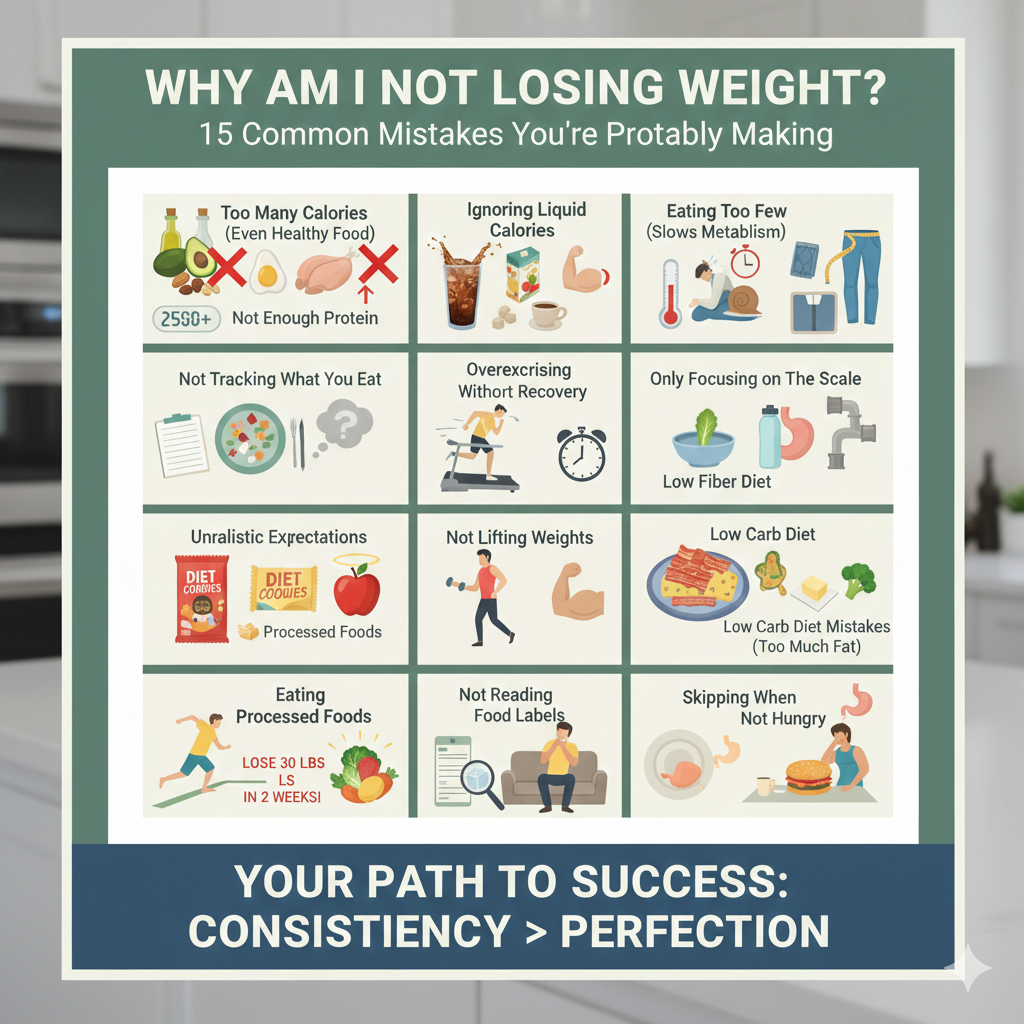
The truth is, losing weight isn’t always as simple as eating less and moving more. There are dozens of hidden mistakes that can sabotage your progress without you even realizing it. In this comprehensive guide, we’ll uncover why you’re not losing weight and reveal the most common weight loss mistakes that could be holding you back from achieving your goals.
Understanding Why Weight Loss Stalls
Before diving into specific mistakes, it’s important to understand that weight loss is a complex process influenced by multiple factors including metabolism, hormones, sleep, stress, and daily habits. Sometimes what seems like a healthy choice might actually be preventing fat loss.
Let’s explore the fifteen most common weight loss mistakes and, more importantly, how to fix them.
1. Eating Too Many Calories (Even from Healthy Foods)
One of the biggest weight loss mistakes beginners make is assuming that healthy foods can be eaten in unlimited quantities. While foods like nuts, avocados, olive oil, and whole grains are nutritious, they’re also calorie-dense.
The Problem: You might be eating healthy but not losing weight simply because your total calorie intake exceeds what your body burns.
The Fix: Track your portions, even with healthy foods. A handful of almonds contains about 160 calories, and those calories add up quickly throughout the day.
2. Not Eating Enough Protein for Weight Loss
Protein is your secret weapon for fat loss, yet many people don’t consume enough of it. Protein helps preserve muscle mass during weight loss, keeps you feeling full longer, and requires more energy to digest than carbohydrates or fats.
Why it matters: Without adequate protein intake for fat loss, your body might break down muscle tissue instead of burning fat, which slows your metabolism.
Recommended intake: Aim for 0.8 to 1 gram of protein per pound of body weight. Include high protein meals for weight loss such as:
- Chicken breast
- Fish
- Eggs
- Lentils and beans
- Greek yogurt
- Paneer (cottage cheese)
3. Ignoring Liquid Calories
Sugary drinks and weight loss simply don’t mix. One of the easiest weight loss mistakes to overlook is consuming calories through beverages. Fruit juices, sweetened tea, energy drinks, and even seemingly healthy smoothies can contain hundreds of hidden calories.
The Reality: A single glass of mango juice contains approximately 120-150 calories with minimal nutritional benefit. These liquid calories don’t trigger the same fullness signals as solid food.
Better choices: Water, black coffee, green tea, or herbal infusions are the best drinks for weight loss.
4. Eating Too Few Calories and Slowing Your Metabolism
Ironically, one of the common weight loss mistakes is not eating enough. When you drastically cut calories, your body enters “starvation mode,” slowing down your metabolism to conserve energy.
Warning signs:
- Constant fatigue
- Hair loss
- Feeling cold all the time
- Mood swings
- Weight loss plateau
The Solution: Maintain a moderate calorie deficit of 300-500 calories below your maintenance level rather than extreme restriction.
5. Focusing Only on the Scale Weight
The scale not moving but losing fat is actually a common and positive occurrence. Your body composition can improve dramatically even when the number on the scale stays the same.
Understanding the difference: Fat loss and weight loss aren’t identical. You might be building muscle while losing fat, resulting in no change in total weight but a leaner, more toned appearance.
Better metrics:
- Take body measurements
- Progress photos
- How your clothes fit
- Energy levels and strength improvements
6. Not Tracking What You Eat
Not tracking calories for weight loss is like trying to save money without checking your bank account. Most people underestimate their calorie intake by 20-50%.
Benefits of food tracking:
- Identifies hidden calorie sources
- Reveals eating patterns
- Creates accountability
- Helps adjust portions
Simple approach: Use a food diary app or even a simple notebook to record everything you consume for at least two weeks.
7. Overexercising Without Proper Recovery
Too much cardio or overexercising can actually lead to weight gain through increased stress hormones like cortisol, which promotes fat storage, especially around the belly.
The balance: Exercise is crucial, but rest and recovery are equally important. Overtraining can lead to:
- Increased hunger and cravings
- Poor sleep quality
- Elevated stress hormones
- Muscle breakdown
Recommendation: Combine moderate cardio with strength training, and ensure adequate rest days.
8. Not Lifting Weights During Weight Loss
Many people, especially women, make the mistake of only doing cardio. Not lifting weights for weight loss is a missed opportunity because strength training vs cardio for fat loss offers unique benefits.
Why strength training matters:
- Builds lean muscle mass
- Increases resting metabolic rate
- Improves body composition
- Prevents muscle loss during dieting
Getting started: Even 2-3 resistance training sessions per week can make a significant difference.
9. Low Fiber Diet Causing Weight Loss Problems
Fiber is often overlooked, yet it’s essential for sustainable fat loss. Benefits of fiber for weight loss include improved digestion, prolonged fullness, and better blood sugar control.
Fiber-rich foods:
- Vegetables (especially leafy greens)
- Whole grains like oats and brown rice
- Legumes and lentils
- Fruits with skin
- Chia seeds and flaxseeds
Target: Aim for 25-35 grams of fiber daily.
10. Low Carb Diet Weight Loss Mistakes
While low-carb diets can be effective, there are specific pitfalls. Common low carb diet mistakes include:
Eating too much fat: Just because a keto diet allows high fat doesn’t mean unlimited calories. Many people wonder why their keto weight loss stopped—excess fat calories are still calories.
Not enough variety: Relying on the same foods can lead to nutrient deficiencies.
Ignoring vegetables: Low-carb doesn’t mean no vegetables. Include non-starchy vegetables for vitamins, minerals, and fiber.
11. Unrealistic Weight Loss Expectations
Perhaps the most damaging mistake is setting unrealistic weight loss goals. Social media and fad diets promise rapid transformations, but healthy rate of weight loss per week is typically 0.5 to 1 kilogram (1-2 pounds).
Why weight loss takes time:
- Your body needs to adjust metabolically
- Sustainable habits develop slowly
- Rapid weight loss often means muscle and water loss, not fat
Realistic goals: Aim to lose 5-10% of your body weight over 3-6 months.
12. Eating Processed Foods Instead of Whole Foods
Diet foods that cause weight gain are a real problem. Many “low-fat” or “diet” products contain hidden sugar in diet foods to compensate for reduced fat content.
Processed foods weight loss problems:
- High in refined carbohydrates
- Loaded with added sugars
- Contain artificial ingredients that may affect metabolism
- Less satisfying than whole foods
Better approach: Choose whole foods vs processed foods—fruits, vegetables, lean proteins, and whole grains.
13. Not Reading Food Labels
Not reading food labels for weight loss means you’re flying blind. Manufacturers use deceptive serving sizes and confusing terminology.
What to check:
- Actual serving size (often smaller than expected)
- Total calories per container
- Added sugars
- Sodium content
- Ingredient list (shorter is usually better)
14. Eating When Not Hungry
Non-hungry eating and weight gain are closely linked. Many people eat due to boredom, stress, social situations, or habit rather than true hunger.
Common scenarios:
- Eating too often throughout the day
- Snacking while watching TV
- Finishing children’s leftover food
- Emotional eating during stress
Mindful eating for weight loss: Before eating, ask yourself if you’re truly hungry or just responding to external cues.
15. Skipping Meals Thinking It Helps
The breakfast and weight loss myths have confused many people. While intermittent fasting works for some, skipping meals haphazardly can backfire by causing:
- Extreme hunger leading to overeating later
- Poor food choices when finally eating
- Slowed metabolism
- Blood sugar fluctuations
Better strategy: Eat balanced meals at regular intervals that work with your schedule and lifestyle.
How to Fix Your Weight Loss Approach
Now that you understand these common mistakes, here’s a practical action plan:
Week 1-2: Start tracking your food intake honestly, including drinks and small bites.
Week 3-4: Adjust your protein intake and add strength training twice weekly.
Month 2: Focus on whole foods, increase fiber, and establish consistent meal times.
Month 3+: Fine-tune based on results, adjust calories if needed, and focus on consistency rather than perfection.
Frequently Asked Questions
Q1: How long does it take to see weight loss results?
Most people start seeing changes within 2-4 weeks, though scale weight might fluctuate due to water retention. Visible body composition changes typically appear after 6-8 weeks of consistent effort.
Q2: Why is the scale not moving but my clothes fit better?
This happens when you’re losing fat while building muscle. Muscle is denser than fat, so your body becomes smaller and more toned even if weight stays the same. This is actually excellent progress.
Q3: How many calories should I eat to lose weight?
A safe calorie deficit is 300-500 calories below your maintenance level. For most people, this means 1,500-2,000 calories daily for women and 2,000-2,500 for men, though individual needs vary based on age, activity level, and metabolism.
Q4: Is it better to do cardio or weight training for fat loss?
Both have benefits, but combining them works best. Strength training builds muscle that increases metabolism, while cardio burns immediate calories. Aim for 2-3 strength sessions and 2-3 cardio sessions weekly.
Q5: Can I lose weight without exercising?
Yes, weight loss is primarily driven by calorie intake. However, exercise provides numerous health benefits, helps preserve muscle during weight loss, and makes maintenance easier long-term.
Q6: Why did my weight loss suddenly stop?
Weight loss plateaus are normal as your body adjusts. Common causes include metabolic adaptation, water retention, increased muscle mass, or unconsciously eating more. Reassess your calorie intake and activity level.
Q7: How much water should I drink for weight loss?
Aim for 8-10 glasses (2-3 liters) daily. Water helps with metabolism, reduces water retention, prevents mistaking thirst for hunger, and supports overall health during weight loss.
Conclusion: Your Path to Successful Weight Loss
Understanding why you’re not losing weight is the first step toward breaking through your plateau. The most common weight loss mistakes aren’t about willpower or discipline—they’re about misinformation and hidden pitfalls that trip up even the most dedicated individuals.
Remember these key takeaways: eat adequate protein, track your intake honestly, combine strength training with cardio, choose whole foods over processed options, set realistic expectations, and be patient with the process. Weight loss isn’t linear, and temporary stalls don’t mean failure.
Focus on building sustainable habits rather than seeking quick fixes. Whether you’re eating healthy but not losing weight or struggling with portion control mistakes, small adjustments to your approach can create significant results over time.
The journey to a healthier body isn’t just about the destination—it’s about developing a lifestyle you can maintain forever. Start by fixing one or two mistakes from this list, master those changes, then gradually address others. Consistency beats perfection every time.
Your weight loss success is within reach. Now that you know these common pitfalls, you’re equipped to avoid them and finally see the results you deserve.